Start with the result the property actually needs
A proposal should begin with the requested result, not with a piece of equipment. For retail and mixed-use exterior cleaning, a property may need a light rinse, organic-growth treatment, visible facade improvement, entrance presentation, maintenance documentation, or a more specialized restoration process. Those outcomes can look similar in a photo while requiring very different chemistry, dwell time, pressure, contact tools, and closeout standards. Ask which elevations and surfaces must improve, how the result will be judged, and what conditions are acceptable to leave in place. A clear result keeps the conversation grounded when the building has multiple materials or several occupants.
For a property in Dublin, Ohio, write the requested result in plain language before requesting pricing. Include the visible concern, the areas that matter most, the preferred finish, and any date or event that affects the work window. If the property needs a squeegee finish, scraped construction residue, mineral-deposit removal, paint correction, or envelope repair, state that directly. A responsible cleaning scope can include drone-assisted wetting or rinsing where it fits, while also identifying the portions that need contact access or another trade. That honesty makes comparisons easier and protects the property from an attractive but incomplete promise.
Document the surface before choosing the method
Surface type changes the risk profile of the job. Storefronts, shared entrances, residential and office facades, canopies, sidewalks, signs, and parking-facing elevations can respond differently to pressure, chemistry, dwell time, rinse volume, and repeated maintenance. Record whether the surface is painted, coated, porous, sealed, jointed, fragile, reflective, or already showing failure. Note adjacent windows, sealants, lighting, landscaping, doors, signage, and materials that cannot receive the same treatment. A small test area is often more useful than a confident general statement because it reveals how the actual substrate responds.
The condition should also be named accurately. Tenant-facing grime, food-service residue, algae, traffic film, and uneven appearance across shared property areas is not automatically the same as oxidation, hard-water scale, construction residue, failed coating, or embedded contamination. Take representative photos from consistent angles and mark the elevation or service zone. Include areas where the desired result may be limited by age, prior damage, shade, drainage, or material variation. The site review should explain what cleaning can reasonably improve and what should be referred for repair, restoration, or envelope evaluation.
Where drone assistance can add value
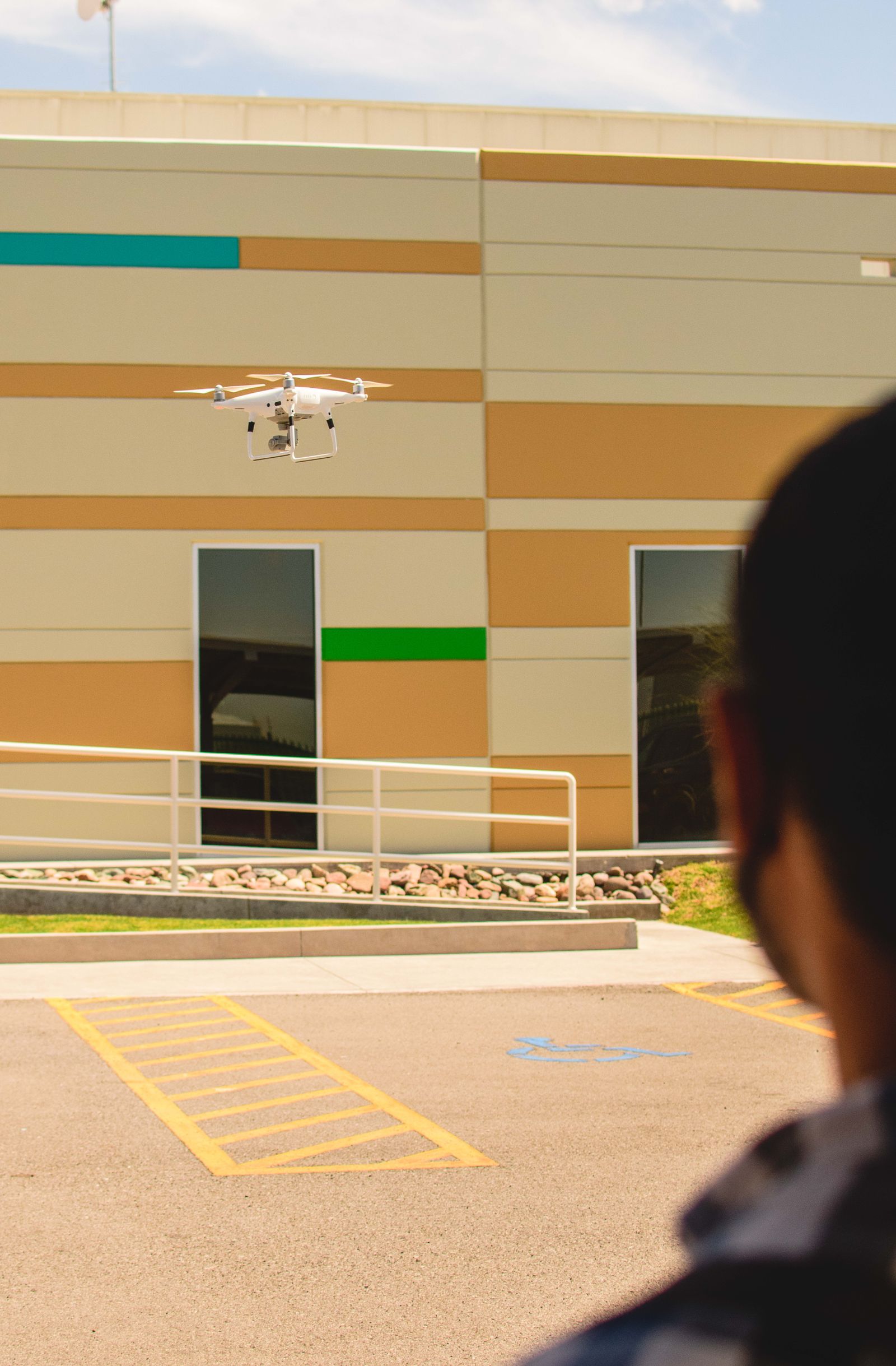
Drone-assisted cleaning is most useful when the building has adequate stand-off distance, a workable launch area, manageable wind, compatible surfaces, clear visibility, safe hose routing, and a controlled ground zone. In those conditions, the aircraft can help deliver water or cleaning solution to portions of an upper facade that would otherwise require more setup for every rinse pass. A ground crew remains responsible for the water system, hose management, perimeter controls, communication, surface observation, and the decision to pause. The method is a coordinated system, not an unattended flight.
The practical value is often operational rather than magical. The right project may reduce repeated lift repositioning, shorten setup in a constrained area, or make a planned rinse cycle easier to stage around tenants and vehicles. Compare that benefit against the building geometry and the finish required. If wind pushes the spray toward people, if the facade has fragile details, if the launch area is inadequate, or if the work requires sustained contact pressure, another method may be safer and more effective. A good scope says why drone assistance fits this elevation and where it does not.
Know the limits before the quote is final
The most trustworthy scope names its limits. Tenant hours, resident access, loading activity, signage, landscaping, public routes, and different facade materials require a phased property-specific plan. That does not make drone-assisted cleaning less useful; it makes the proposal more accurate. A rinse can remove loose film without correcting a mineral deposit. A soft wash can address organic growth without repairing a leaking joint. A building can look noticeably improved while still needing contact detail on a few edges or specialty work on a difficult stain. Separate the base cleaning scope from optional or referred work so the property team understands what is included.
Ask the provider to identify the finish that the method is designed to produce, the surfaces excluded from the quote, and the conditions that trigger a change in plan. The exclusions should cover access, weather, wind, water, drainage, occupant control, delicate materials, and any required lift, pole, or hand work. This is especially important when the property has public entrances or an event deadline. Clear limitations help the buyer approve a realistic scope instead of discovering after the work begins that the selected method cannot produce the requested result.
Build a work window around real operations
A commercial exterior-cleaning schedule has to fit the property, not just the crew calendar. Identify arrivals, departures, deliveries, loading, valet, school movement, patient access, tenant peaks, meetings, events, trash collection, and any area where a hose or exclusion zone would create a conflict. The best window may be early morning, a phased sequence by elevation, a low-traffic weekday, or a short visit repeated over several dates. Decide who communicates with occupants and who can authorize a pause when conditions change.
For retail and mixed-use exterior cleaning, the work plan should show where the crew stages, where the aircraft or access equipment operates, how pedestrians and vehicles are separated, and how the entrance remains usable. Weather can change the plan even after a date is reserved. Establish thresholds for wind, lightning, precipitation, visibility, and surface conditions, along with a practical rescheduling process. A documented window reduces last-minute pressure and gives the property team a useful record if an elevation is deferred or the sequence changes.
Plan water, drainage, and adjacent assets
Water planning belongs in the scope before the first rinse. Identify the water source, hose route, pressure or flow needs, drainage paths, storm drains, landscaping, loading areas, public walks, vehicles, neighboring tenants, and surfaces that could be affected by overspray or runoff. The method and chemistry should be selected with the water path in mind. Depending on the site and local requirements, the plan may call for diversion, containment, filtration, recovery, controlled rinse volume, or simply keeping the work away from a sensitive drainage path. Do not assume that a visible drain is the only route water can take.
The same review should protect adjacent assets. Cover or isolate vulnerable lighting, doors, alarms, signage, plants, outdoor seating, equipment, and materials that are not part of the cleaning scope. Record who supplies water, who controls the area, and how the crew will respond if the observed flow differs from the plan. For a property in Dublin, Ohio, local weather and seasonal runoff patterns may influence the timing. The useful standard is a written method that makes the water path understandable to the facility team.
Make compliance and communication visible
Commercial drone work in the United States should be planned around applicable FAA requirements, aircraft registration, Remote ID where required, pilot qualification, visual line of sight, airspace review, weather limits, and the specific operating conditions of the site. Cleaning chemistry, equipment, public access, and building rules add another layer of responsibility. A property team does not need a lecture in regulations, but it should receive a clear explanation of who is responsible for flight planning, ground controls, chemical handling, and stop-work decisions.
Communication should be practical. Confirm the property contact, crew lead, site safety contact, emergency access route, guest or tenant notice, signage, spotters, radio or phone method, and the event that ends the work window. If a property has restrictions on photography, roof access, or public-area staging, record those before mobilization. Good communication is part of the service quality because it prevents a technically successful cleaning pass from creating an avoidable operational problem.
Use documentation to improve the next visit
A closeout record should show what was cleaned, what was deferred, how conditions changed, and what the property should do next. Use consistent before-and-after viewpoints, identify elevations or zones, and pair the images with notes about weather, access, water controls, remaining stains, and any unexpected condition. For recurring work, keep the same naming system so the next visit can compare like with like. Documentation is useful to owners, engineers, hotel teams, tenants, and procurement staff because it turns a service visit into a maintenance record rather than a one-time conversation.
The record should also preserve the limits of the result. If contact cleaning was recommended, if a coating looked fragile, if a drainage issue was observed, or if a section was deferred because of wind or access, say so plainly. The next scope can then be improved instead of starting from memory. For retail and mixed-use exterior cleaning, a photo report is especially valuable when the property has several elevations or a recurring schedule. It gives decision-makers evidence for timing, budget, and follow-up without overstating what the cleaning method accomplished.
Compare proposals on scope and outcome
When comparing proposals, put the equipment name to one side and compare the actual work. Look for the service zones, surface assumptions, cleaning method, test-spot approach, water plan, access method, ground controls, work window, weather rules, exclusions, photos, closeout notes, and rescheduling terms. Ask what happens if the surface does not respond as expected or if an area needs a lift, pole, hand detail, or specialty restoration. The lowest initial number can become the least useful choice if the scope leaves the most important finish undefined.
A good buying decision also considers repeatability. Can the property describe the work to the next vendor? Can the maintenance team see which areas changed? Can the schedule be repeated without creating new access conflicts? Is the provider clear about what it can and cannot accomplish? Coordinate a consistent exterior standard across active retail, residential, and office uses without disrupting customers, residents, or deliveries is easier when the proposal makes those answers visible. Build a simple comparison table and require each bidder to respond to the same questions.
A practical decision sequence
Start with the visible problem and the requested finish. Next, map the surfaces, height, access, water, drainage, traffic, occupants, weather exposure, and any materials that need special handling. Then compare the available methods for each zone instead of forcing one method across the entire building. If drone assistance is a fit, document the operating controls and the ground crew responsibilities. If contact access is required, include it as part of the honest plan rather than treating it as a failure.
For retail and mixed-use exterior cleaning, the final sequence should end with a written scope, a confirmed work window, a site communication plan, and a closeout standard. The property team should know what success looks like, what will remain outside the scope, and what evidence will arrive afterward. That sequence is useful whether the property is in Dublin, Ohio or another market. It keeps the conversation focused on safe, surface-appropriate results and creates a foundation for a future maintenance cadence.
Questions to ask before moving forward
What should be included in a commercial cleaning budget? Ask for a plain-language answer tied to the actual building. What surface assumptions are being made? Which elevations are included? What result should the property expect? Where does the method stop? How will water, pedestrians, vehicles, guests, tenants, landscaping, and drains be protected? What weather or wind conditions trigger a pause? Who owns the site communication plan? What photos and notes arrive after the work?
Also ask what the provider would change after seeing the property in person. A useful answer may include a test area, a different chemistry, a split scope, a contact-cleaning recommendation, a lift or pole backup, or a decision to defer a sensitive elevation. Those changes show that the proposal responds to the building instead of relying on a generic package. The goal is not to force a drone into the job. The goal is to choose the method that gives the property the most defensible result with the least unnecessary disruption.
Frequently asked questions
What should be included in a commercial cleaning budget? The answer should start with the requested finish, the surfaces involved, and the operating conditions. Then document access, water, weather, occupant control, limitations, and the closeout record before approving a method.
Can drone-assisted cleaning replace every other access method? No. It can support compatible wetting, soft washing, and rinse work, but contact cleaning, restoration, repair, delicate materials, and some building geometries still require another approach.